Design & Production Process

Professional CAD design, 3D printing process, and materials explained

How to transform ideas into reality

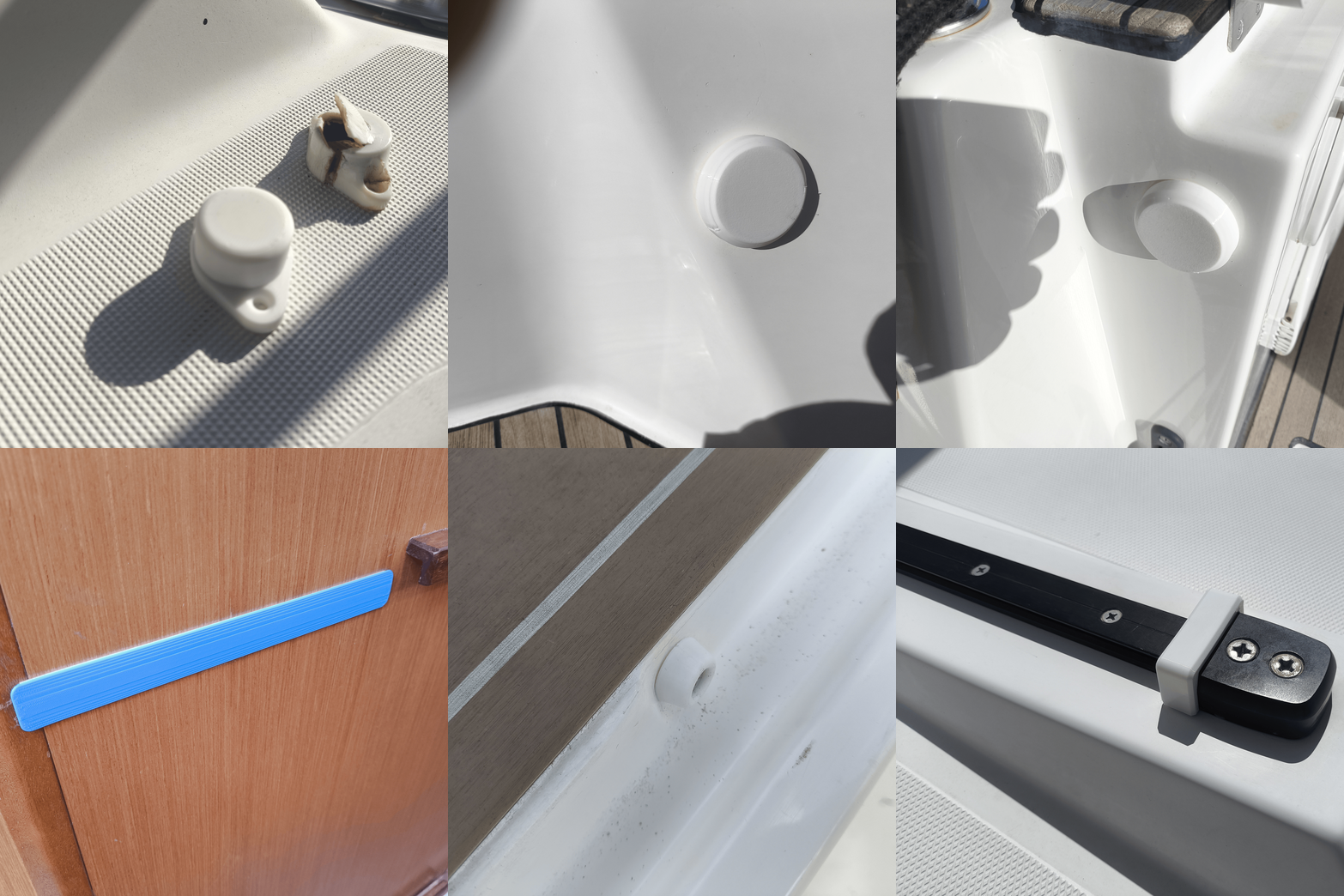
Almost every projects starts with accurately measuring the situation. Like taking dimensions of an item that needs replacing or modification, or documenting a situation for which a solution has to be created, often the old fashion way with pen and paper.

Design preparation
3D CAD design

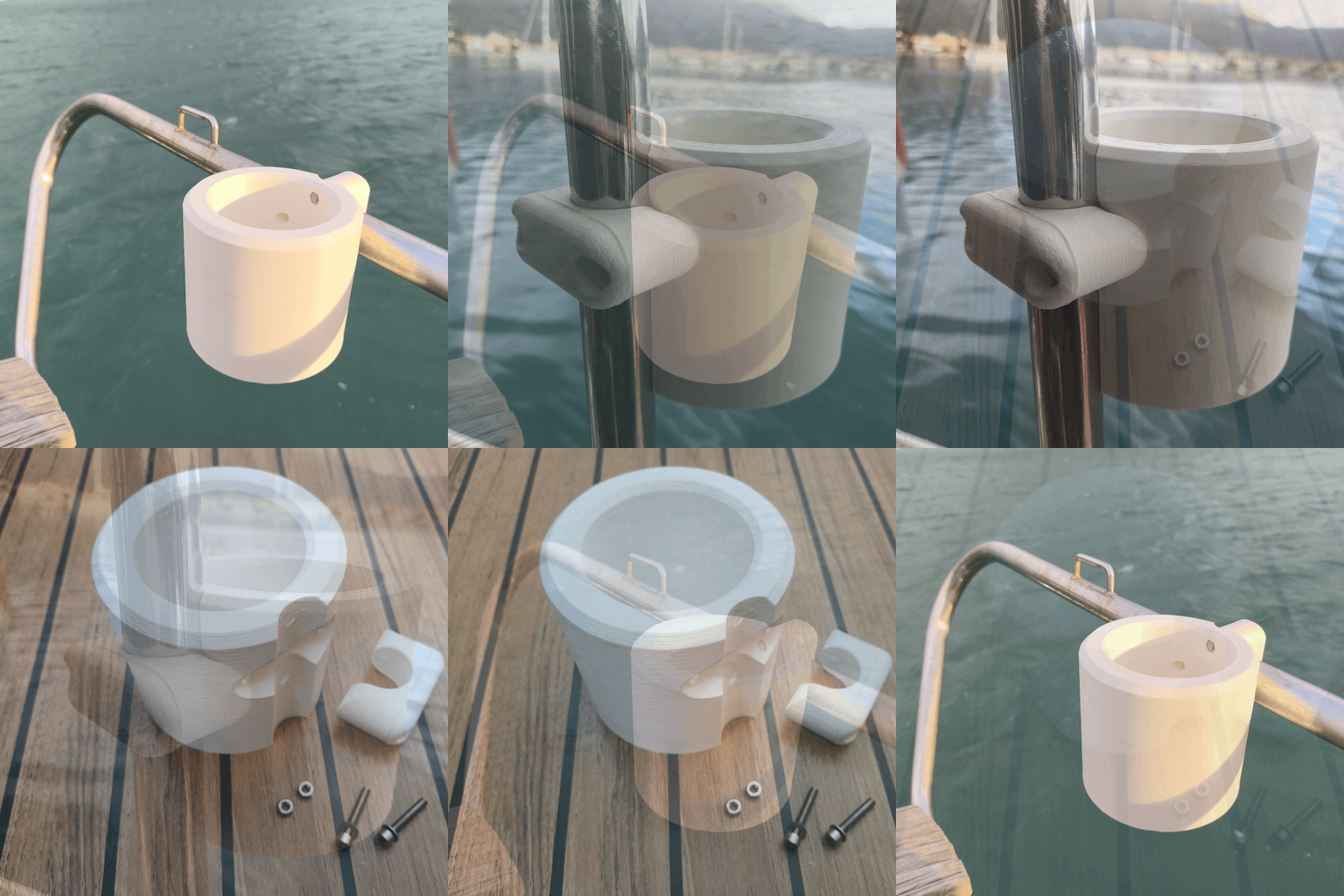
The actual design is carefully performed in professional 3D CAD software, ensuring precision and functionality and with consideration of the actual printing process. Structural, visual, cost and complexity factors are playing a large role early in the process.

Before the printer can start producing, an extra piece of software called the slicer, will convert the CAD design file to a printable file. It slices the object into very thin layers (usually 0.15-0.3mm) and determines how each of these layers will be built up.

Print preparation
Printing process

The objects are produced with FDM printing. Melted plastic is squeezed through a tiny nozzle, first onto a hot build plate and then layer by layer until the object is finished. After cooling down, it is ready for use, assembly or post processing.

Many different materials are possible, mostly some type of plastic and each of these has its own properties. Structural strength, flexibility, ambient temperatures, UV-resistance and costs are all considered when choosing a material.

Furthermore, there are special materials, like glass fiber enhanced plastics, glow in the dark plastic and even wood and metal, though these last ones are actually a plastic mixture. Don't expect a 3D printed object to have the same structural properties as aluminium or Inox.

Printing materials
PLA, ASA, ABS, TPU...

Mostly used materials are below. Special materials on request.

PLA : Low cost, Low temperature, Low UV resistance

ABS : Medium cost, High temperature, Medium UV-resistance

ASA : Medium cost, High temperature, High UV-resistance

TPU rubber : Medium cost, High flexibility, Medium UV-resistance

TPU is available in several different shore hardnesses, ranging from 68D to 95, 90, 85A. All materials are available in many different colors.

FAQs

What is the maximum 3D printing size?

25x25x25cm for one item. Sometimes I print parts in two pieces and glue these together.

Can I provide my own design?

Yes you can. It saves you design costs, which is often the most expensive part of the whole process. Preferably provide me with a file in STL format.

What does custom design cost?

Short answer: A lot. But it depends so much on the situation that it is hard to answer this question generally.

Keep in mind an hourly rate of 130 Euros we charge in The Netherlands. In Greece the rate is a bit lower though and often a similar design has been done before, which can be modified to your specific requirements, saving a lot of precious time.

How long does printing take?

Short answer: a long time. The size, the materials and several other factors come into play. Some print take just 10 minutes, many more take 1-2 hours. Often it is even more than that.

How can I keep the cost down?

Provide as much design details as possible. You could provide a hand drawn sketch with dimensions, or even a finished digital file.

Have a product printed in bulk. If you need just one item, designing and printing is more expensive per item.

Can you print multiple colors at once?

Yes, I make many multi color products. Mostly signs or parts with a name or logo embedded. In theory there are no limits, but the printing time and therefor the costs could increase rapidly.

A maximum of 4 colors in one print is preferred, more than that immediately increases the costs.

What makes a print expensive?

Designing a product costs time. Usually that is the most expensive part of the process. When extreme precision is required, it might take several prototype prints, testing, design modification and prototyping again, etc. This could drive up the costs significantly.

Also printing time, if really long, drives up costs. Especially when printing ABS or ASA, it takes a lot of energy. Sometimes the sun does not provide enough energy and my yacht has to fall back to generator power. That drives up the costs.

New for 2026: Vinyl sticker cutting

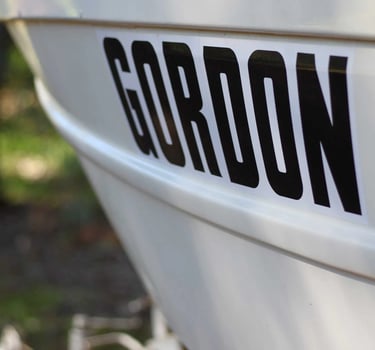
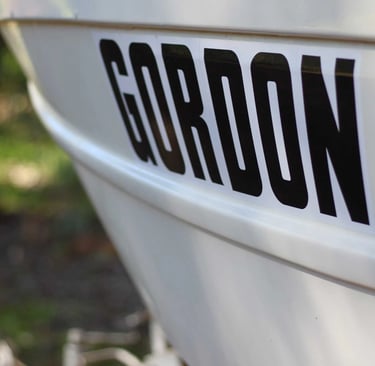
I have been 3D printing boat names and signs in various shapes and styles. Fairly often customers asked if I could create signs and boat names with vinyl stickers.

So I am happy to announce that now I have a vinyl cutting plotter onboard to fulfill this demand. Stickers are available in many different colors and with a maximum size of 30cmx30cm per cutout.

More details on this topic follows.